
Beyond Relaxation: Why Holistic Healing Is Becoming a Lifestyle, Not Just a Treatment
There was a time when many people thought of holistic healing as something they scheduled only when they were stressed, overwhelmed, or in need of a reset. A massage. A meditation class. A Reiki session. A foot zoning appointment. A quiet hour away from the demands of everyday life. But something is shifting. For many people, holistic healing is no longer seen as a once-in-a-while treatment. It is becoming a lifestyle — a way of living with greater intention, awareness, and connection to the body, mind, spirit, and soul.
This movement is not just about feeling relaxed for an hour. It is about learning how to live differently.
The Rise of Whole-Person Wellness
Holistic healing begins with the belief that we are more than just physical bodies. Our thoughts, emotions, environment, habits, energy, relationships, and spiritual lives all influence how we feel.
This is why so many people are becoming drawn to practices like energy healing, zoning, reflexology, Reiki, meditation, hypnosis, QHHT, breathwork, grounding rituals, and conscious self-care. These practices speak to something deeper than surface-level wellness. They invite people to slow down, listen inward, and reconnect with themselves.
Rather than asking only, “How do I fix this discomfort?” holistic wellness asks a broader question: What is my body, my energy, and my life trying to tell me?
From Appointment to Practice
A treatment can be powerful. A foot zoning session may help a person feel grounded. A Reiki session may help someone feel lighter and calmer. Meditation may create a sense of stillness. QHHT may open the door to deeper reflection and inner guidance.
But the deeper transformation often happens when these experiences begin to influence daily life.
A person may start clearing their space more intentionally. They may light a candle before prayer or meditation. They may become more aware of their breath, their thoughts, or the energy they bring into a room. They may begin to notice how their bodies respond to stress, what patterns they carry, and what kind of support they truly need.
This is where holistic healing becomes more than a treatment. It becomes a rhythm.
Clean Spaces, Clear Energy
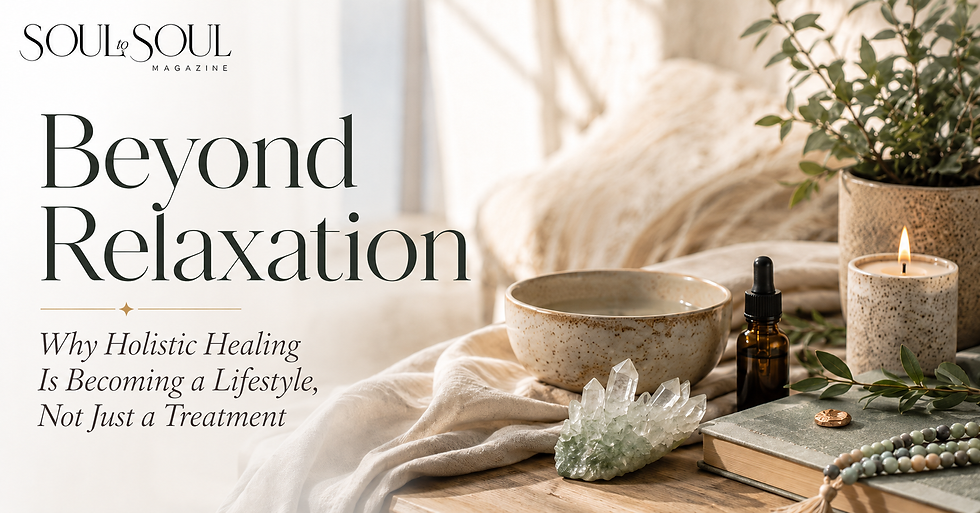
One of the most beautiful aspects of holistic living is how it changes our relationship with our environment. A clean, peaceful space can become part of the healing process. Soft lighting, fresh air, natural textures, plants, candles, crystals, sound bowls, essential oils, and meaningful objects can all help create a sense of calm and intention. This does not have to be elaborate. A healing space can be as simple as a quiet corner, a folded blanket, a candle, and a few minutes of stillness. The point is not perfection. The point is presence. When we create spaces that feel peaceful, we are also inviting the nervous system to soften, the mind to quiet, and the soul to breathe.
The Body as a Messenger
Practices like zoning and reflexology are rooted in the idea that the body is connected. The feet, face, and back can each be seen as maps — places where tension, stress, energy, and emotion may show up. Foot zoning may help someone feel grounded and balanced.Face zoning may bring a sense of softness, calm, and emotional release.Back zoning, a growing area of interest in holistic wellness, speaks to the place where many people carry stress, responsibility, and emotional weight. These practices encourage us to see the body not as something to ignore until it hurts, but as something to listen to with care. The body often whispers before it shouts. Holistic healing teaches us to pay attention to those whispers.
Energy Healing and the Inner Life
Energy healing practices such as Reiki, intuitive energy work, and chakra balancing invite people to explore the unseen layers of well-being. For some, this may feel spiritual. For others, it may simply feel calming, grounding, and restorative. Either way, the appeal is often the same: people want to feel more connected. They want to understand themselves beyond the busyness of daily life. They want to release what feels heavy and return to what feels true. This is also why hypnosis and QHHT are becoming meaningful parts of the larger holistic conversation. These practices invite people to explore the subconscious mind, inner wisdom, spiritual insight, and the stories or patterns that may be shaping their lives.
Whether someone approaches QHHT literally, symbolically, or spiritually, it can serve as a doorway to deeper self-reflection.
Ritual as Self-Care
One reason holistic healing is becoming a lifestyle is that people are craving ritual.
Ritual gives meaning to ordinary moments. It turns a cup of tea into a pause. It turns a candle into an intention. It turns a breath into a return. It turns a quiet room into a sacred space.
Ritual does not have to be complicated. It can look like:
taking three deep breaths before beginning the day
placing a hand over the heart and setting an intention
clearing a room before rest or prayer
walking barefoot outside to feel grounded
journaling after a healing session
drinking water mindfully
turning off noise and choosing silence
creating a weekly wellness appointment with yourself
These small choices help healing move beyond the treatment room and into daily life.
A More Conscious Way to Live
At its heart, holistic living is about consciousness. It asks us to become more aware of what we consume, how we rest, how we speak to ourselves, how we care for our bodies, and how we protect our peace. It is not about doing everything perfectly. It is not about following every trend or collecting every healing tool. It is about becoming more intentional.
Intentional with the body.Intentional with energy.Intentional with space.Intentional with thought.Intentional with healing.Intentional with the soul.
Healing as a Lifestyle
The future of holistic wellness is not just about booking treatments. It is about building lives that support balance, clarity, and connection.
Treatments like zoning, reflexology, Reiki, hypnosis, QHHT, meditation, and energy healing can be powerful touchpoints along the way. But the deeper invitation is to carry that healing into the way we live. To create cleaner spaces.To honor the body’s messages.To listen to intuition.To make room for stillness.To release old patterns.To choose rituals that restore us. To remember that healing is not always dramatic — sometimes it is quiet, steady, and deeply personal. Holistic healing is becoming a lifestyle because people are beginning to understand that wellness is not something we visit. It is something we practice.
And sometimes, the most meaningful healing begins when we stop treating self-care as an appointment and start living it as a way of being.


Comments